What happens to planets if the Sun dies?
Interesting
−
12153 3 minutes
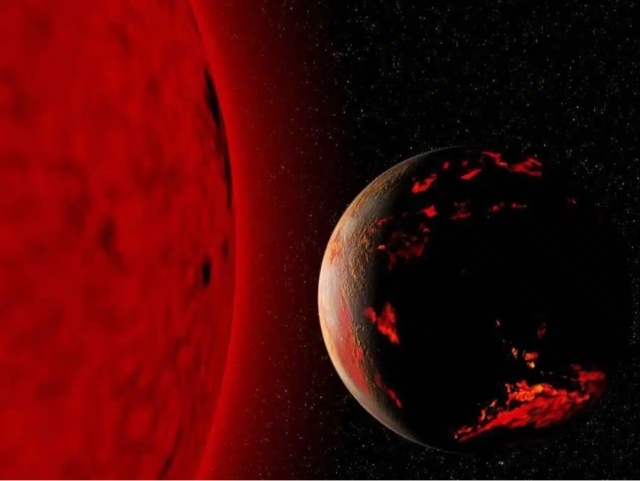
Astronomers have found that after the Sun turns into a white dwarf, the orbits of the planets in its system may become unstable, and most of them may leave the system. Naked Science reported this, citing a study published in The Astrophysical Journal Letters.
According to the scientists' calculations, in about 5 billion years the Sun will expand sharply and turn into a red giant. In this process, its outer layers may reach the current orbit of Earth. However, what exactly will happen to Earth is not yet clear: the planet may move to a more distant orbit as the Sun expands, or it may slow down because of interaction with the star's atmosphere.
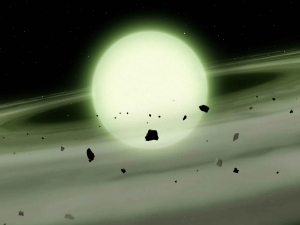
Later, the Sun will lose its outer layers, and its remaining core will turn into a white dwarf. Earlier studies suggested that some planets in the solar system might keep their orbits after this process.
The new study modeled the Sun's mass loss process in more detail. The scientists took into account that the star loses mass not evenly but through pulsations, that is, periodically. Such changes affect the Sun's state and, as a result, the planets' orbits. Over time, small changes can accumulate and disrupt the dynamic stability of the whole system.
According to the modeling results, in the first 3 billion years after the Sun turns into a white dwarf, orbital stability was disrupted in 96 percent of planetary systems. In 40 percent of the systems, such changes happened even while the Sun was still in the red giant stage.
This does not mean that all planets will necessarily disappear. In some cases, the orbits of Uranus and Neptune may swap places, while the movement of other planets may change sharply. In some modeled systems, the mutual alignment of planetary orbits helped them stay stable for a long time.
According to the study, the average lifetime of a planetary system similar to the solar system in realistic scenarios was about 1 billion years. In the theoretical scenario in which the Sun loses mass evenly, without pulsations, this time was extremely long, up to a quintillion years. However, the second result is based on idealized calculations that do not fully reflect real conditions.
The scientists stress that the new results do not answer all questions about the future of the solar system. In particular, planets have been found even around white dwarfs and neutron stars.
Some of them may have formed after stellar evolution, while others survived from earlier planetary systems. If the new calculations are correct, how such planets kept their orbits will require further research.
As a reminder, it was previously reported that NOIRLab astronomers published a new image of the object NGC 1514, known as the "Crystal Ball Nebula."

Live
All