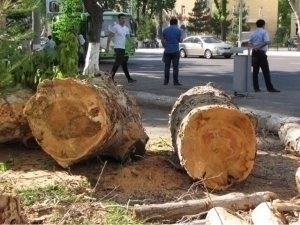
Ekologiya vazirligi daraxt kesishga cheklov bekor qilinishini taklif qilgan Murod Nazarovga javob yo‘lladi
Jamiyat
−
19 Iyul 2025 13086 4 daqiqa


Avvalroq, tadbirkor Murod Nazarov Toshkent shahrida qurilish qilayotganlarga daraxt kesishga cheklov qo‘yish noto‘g‘ri ekanini aytib, tadbirkorlar qurilish jarayoniga xalal bergani uchun ayrim daraxtlarni kesishga majbur bo‘layotganini ta’kidlagandi. Tadbirkorning ushbu gaplariga Ekologiya, atrof-muhitni muhofaza qilish va iqlim o‘zgarishi vazirligi munosabat bildirdi.
Vazirlikka ko‘ra, O‘zbekiston dengiz va okeanlarga chiqish imkoniyatiga ega bo‘lmagan mamlakat sifatida kislorod manbalari va karbonat angidridni yutish imkoniyatidan mahrum. Shu bilan birga, hududning 60 foizdan ortig‘i cho‘l va yarim cho‘llardan iborat bo‘lib, iqlim o‘zgarishlariga nisbatan juda zaif hisoblanadi.
Shuningdek, Markaziy Osiyo mintaqasida iqlim isishi global o‘rtacha ko‘rsatkichlardan ikki baravar tezroq ketmoqda. So‘nggi 30 yilda mintaqada harorat 1,5 darajaga ko‘tarilgan bo‘lsa, bu global o‘rtacha 0,7 darajaga teng. Shunday sharoitda yashil hududlar ekologik muvozanatni saqlashda hayotiy ahamiyatga ega bo‘lib, daraxt kesishga qarshi moratoriy aynan shu maqsadni ko‘zlagan.
Ta’kidlanishicha, rivojlangan davlatlar tajribasi daraxt kesishga qat’iy cheklovlar atrof-muhitni muhofaza qilish va barqaror shaharlashuvning samarali vositasi ekanini ko‘rsatmoqda:
- Germaniyada nafaqat o‘rmonlar, balki shahar daraxtlari ham qonun bilan muhofaza qilingan. Jamoat joylaridagi noqonuniy kesilgan har bir daraxt uchun 50 ming yevrogacha jarima belgilanadi. Bunday holatlarda kompensatsion choralar qat’iy nazorat ostida bo‘ladi.
- Buyuk Britaniyada Tree Preservation Order (TPO) buzilishi uchun 20 ming funtgacha jarima yoki cheklanmagan jarima va ozodlikdan mahrum qilish jazosi belgilangan. 2023 yilda mashhur Sycamore Gap daraxtini kesgan shaxs 4 yildan ortiq qamoq jazosiga hukm qilingan.
- Qozog‘istonda Jinoyat kodeksining 340-moddasiga ko‘ra, noqonuniy daraxt kesish oylik hisoblash ko‘rsatkichining 160 baravari (taxminan 1181 AQSH dollari) miqdorida jarima yoki 40 kungacha hibs jazosi bilan jazolanadi. Mulk musodara qilinishi ham mumkin.
- Rossiyada Jinoyat kodeksining 260-moddasi asosida 1 million rublgacha (12 ming 770 AQSH dollari) jarima yoki 4 yilgacha ozodlikdan mahrum qilish jazosi mavjud. Shuningdek, texnika musodara qilinishi va zarar kompensatsiyasi ham talab qilinadi.
Ma’lumot uchun, O‘zbekistonda daraxtlarni noqonuniy kesish yoki yo‘q qilish uchun javobgarlik belgilangan. Ma’muriy javobgarlikka ko‘ra, ruxsatnomasiz daraxt kesganlik uchun jismoniy shaxslarga 5 BHMgacha, mansabdor shaxslarga 10 BHMgacha, yuridik shaxslarga esa 50 BHMgacha jarima solinadi. Agar daraxt kesish katta zarar yetkazsa, guruh bo‘lib yoki Qizil kitobga kiritilgan o‘simliklarga nisbatan sodir etilsa, Jinoyat kodeksiga muvofiq 3 yilgacha ozodlikdan mahrum qilish jazosi tayinlanishi mumkin. Tabiat muhofazasi hududlaridagi daraxtlarni kesish uchun jazo yanada og‘irroq.
Ekologiya vazirligining bayonotida tadbirkor Murod Nazarov taklif qilgan kompensatsion ekishlar va “daraxtlar banki” mavjud moratoriyga quyidagi sabablar tufayli to‘liq alternativ bo‘la olmasligi qayd etilgan:
- Voyaga yetgan daraxtni hech qanday ko‘chat to‘liq almashtira olmaydi – na SO₂ yutish hajmi, na mikroiqlimga ta’siri, na biologik xilma-xillik bo‘yicha. Yevropa atrof-muhit agentligi ma’lumotlariga ko‘ra, bitta daraxt yiliga 21 kg SO₂ ni yutadi. Birorta ham ko‘chat bu funksiyani o‘n yil ichida bajara olmaydi.
- “Daraxtlar banki” amaliyoti sun’iy ravishda korrupsiya va spekulyatsiyalarni yuzaga keltirishi mumkin. Human Rights Watch’ning Wild Money tadqiqotiga ko‘ra, ayrim mamlakatlarda kompensatsion ekinlar noqonuniy daraxt kesishni yashirishga xizmat qilmoqda. O‘zbekistonda esa kompensatsion ekinlar – mavjud ma’muriy yoki jinoiy javobgarliklarga qo‘shimcha choradir, lekin muqobil emas.
“Afsuski, ayrim qurilish sohasi vakillari ekologik qonunchilikni chetlab o‘tish uchun kinoya bilan aytganda “ijodkorona” yondashuvlarni qo‘llamoqda”, deydi vazirlik.
Vazirlikning yozishicha, mavjud moratoriyni qayta ko‘rib chiqishga urinish, ayniqsa, kompaniyalar o‘z faoliyatiga ESG tamoyillarini joriy etishga intilayotgan, shuningdek, mamlakatda 2025 yil “Atrof-muhitni asrash va yashil iqtisodiyot yili” deb e’lon qilingan bir paytda, afsus bilan qarshi olinadi.
“O‘z chiqishida janob Nazarov har qanday yo‘l bilan daraxt kesish bo‘yicha turli “usullar” qo‘llanilayotganini tilga oldi. Shu munosabat bilan, Vazirlik uning daraxt kesishda qo‘llayotgan yondashuvlarini atroflicha tekshirish uchun huquqni muhofaza qiluvchi organlar tomonidan to‘liq taftish o‘tkazilishi zarur, deb hisoblaydi. Ushbu o‘rganish natijalari uning oldingi faoliyati yuzasidan tegishli xulosalar chiqarish imkonini beradi, deb umid qilamiz.
Jahon amaliyoti shundan dalolat beradiki, barqaror qurilish yashil maydonlarni yo‘q qilib, keyin kompensatsiya qilishga emas, aksincha, ularni saqlashga asoslanadi. Vazirlik konstruktiv muloqotga tayyor, lekin davlat ekologik siyosatining prinsipial asoslarini qayta ko‘rib chiqishga emas”, deyiladi xabarda.

Live
Barchasi