Transition to 12-year education in Uzbekistan: draft law sent to Senate
−
3286 4 minutes
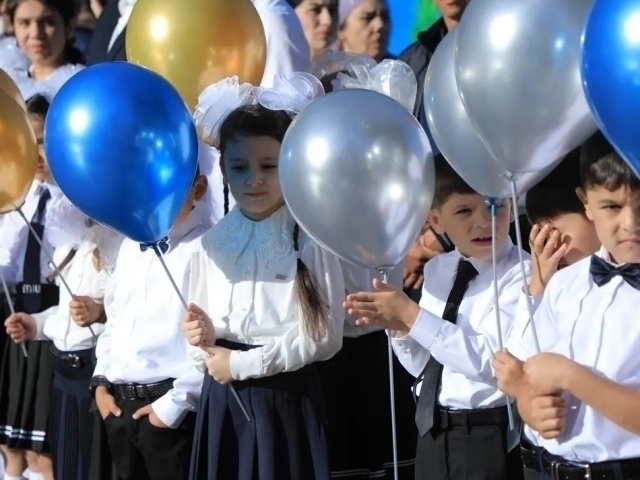
At a regular session of the Legislative Chamber of the Oliy Majlis of Uzbekistan held yesterday, November 24, deputies adopted a law designating a one-year school preparatory course as the initial stage of compulsory general secondary education. Under the legislation, the duration of compulsory general secondary education is set to be extended from 11 to 12 years, according to the Legislative Chamber’s press service.
The bill introduces amendments and additions to the laws "On Preschool Education and Upbringing" and "On Education." Accordingly, the one-year school preparation program will be organized within both preschool institutions and general secondary schools, with every child’s right to undergo such preparation guaranteed by the state.
School preparation will be free of charge
According to Deputy Sayyora Imomova, preschool education coverage in Uzbekistan has currently reached 78 percent, while coverage among six-year-olds stands at 98 percent. The transition to a compulsory one-year school preparation system began in 2018, with a target of achieving 100 percent coverage among six-year-olds by 2027. Under the new law, compulsory preparatory classes will be held in preschool organizations, vacant school classrooms, and social infrastructure facilities in remote areas lacking schools or kindergartens, including "Kelajak" (Future) centers and other educational venues.
Imomova noted that preparatory groups have already been established in vacant rooms across more than 4,000 schools, with plans to open another 246 groups in 191 additional schools. Classes will be led by kindergarten educators in preschool facilities and by highly qualified teachers in schools. Currently, preparatory groups are 98 percent staffed with teaching personnel; reaching 100 percent will require establishing 800 additional groups and creating nearly 20,000 new student places, with the associated expenses factored into the 2027 state budget parameters.
The deputy emphasized that school preparation in state institutions, schools, and kindergartens will be provided free of charge. At the same time, parents retain the option of enrolling their children in private kindergartens or schools, as the law permits non-state educational institutions to operate preparatory groups as well.
Instruction in these groups will follow a specialized curriculum, introducing foundational knowledge and concepts through play-based learning. Over time, educational programs will be gradually aligned with international standards.
What will be the status of six-year-olds?
Deputy Saydullo Azimov requested clarification on whether six-year-old children will be classified under the new system as schoolchildren or preschoolers, noting that this distinction could affect future statistical data. Erkin Murodov, a department head at the Ministry of Higher Education, Science, and Innovation, explained that the existing Law "On Preschool Education and Upbringing" defines preschool age as the period up to age seven—a definition that covers a child’s entire stay in preschool institutions and will remain unchanged.
According to Murodov, the majority of six-year-olds attend full-day groups, and altering the legal definition of preschool age could create complications for nearly 600,000 parents whose children are enrolled in preschool institutions. Deputy Dilmurod Ortiqov added that a committee review found the term "school age" does not exist in current legislation, underscoring that the primary objective is simply to designate the one-year preparatory course as a distinct stage of general secondary education.
Social facilities to be utilized for preparatory classes
Erkin Murodov reported that assessments have identified 101 social facilities across the country—including technical colleges (tekhnikums), local administrative offices, and music and art schools—where small preparatory groups have been set up. Organizational processes, methodological support, and teacher oversight at these sites will be coordinated by preschool education institutions. A separate register of these social facilities will be maintained, while the specific list of eligible venues will be defined in subsequent regulatory acts.
Legislative Chamber Speaker Nuriddin Ismoilov proposed enshrining a state guarantee of every child’s right to compulsory one-year school preparation in the law rather than listing specific venues, noting that a home-schooling system with visiting teachers is also available for children unable to attend school in person.
Deputies also discussed the timeline for the law’s entry into force, emphasizing that educational institutions will require at least six months to prepare for the rollout of the new system.
After passing the Legislative Chamber, the law was sent to the Senate. After the upper house reviews it, the President must sign it for it to take effect.

Live
All