Kazakh coal grows more expensive before reaching Uzbekistan. Entrepreneurs complain of high transport costs
−
467 6 minutes
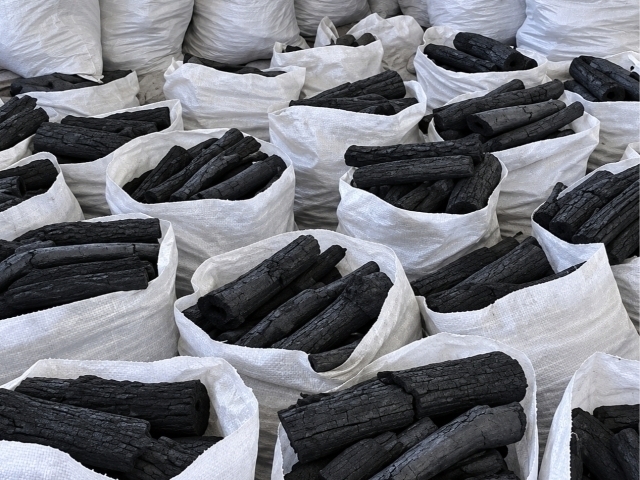
Although a ton of "Shubarkol" coal imported from Kazakhstan is cleared through customs at $40, its price jumps to as high as $110 by the time it reaches greenhouse farms, entrepreneur Khurshid Akhmedov stated during an open dialogue organized by the Chamber of Commerce and Industry on November 16.
The meeting focused on factors driving up the production cost of greenhouse crops, fuel supply challenges, and bottlenecks in importing coal. Entrepreneurs specifically noted that railway logistics, unloading and storage fees, and intermediary markups are significantly inflating the final price of the fuel.
Coal prices nearly triple from their border value
Fuel for heating—especially during the cold season—remains one of the largest expenses for greenhouse farms. According to entrepreneur Khurshid Akhmedov, despite relatively low labor costs, winter heating is pushing up the cost price of produce.
“We have cheap labor. Everyone owns their own land—nobody is paying rent or anything like that. The main factor and problem is fuel,” he said.
Akhmedov illustrated the issue using Shubarkol coal imported from Kazakhstan. According to him, the customs-cleared value of this fuel stood at around $40 per ton in 2024, 2025, and 2026 alike, yet by the time it reaches greenhouse operators, the price climbs to $110.
“Coal imported from Kazakhstan under the Shubarkol brand passes through customs at $40. We pulled this data directly from customs—the price was set at $40 for 2024, 2025, and 2026. Unfortunately, by the time this product reaches the greenhouse farmer, it shoots up to $110,” he explained.
In this example, the price of a ton of coal increases by $70—or 2.75 times—above its official border valuation.
However, this gap cannot be explained by transport fees alone. Processes such as rail freight, unloading from railcars, reloading, warehouse storage, and trucking from the station to the end consumer all add to the final price, alongside taxes and middleman markups.
Unloading yards and the middleman problem
As one of the key drivers behind the price surge, the entrepreneur pointed to rules governing access to railway infrastructure. He noted that even when an importer buys coal directly from a Kazakh producer, they face steep extra costs to unload and deliver it within Uzbekistan.
Akhmedov stated that the country previously had around 66 specialized yards for unloading coal from railcars—known colloquially among businesses as "vetkas" (railway sidings)—all controlled by a single enterprise.
“Until now, there were 66 coal unloading warehouses across Uzbekistan—what we call 'vetkas' in everyday business parlance. All of these sidings were in the hands of a single enterprise called Ko‘mirsanoat. Our President abolished this arrangement and ordered that it be brought onto the commodity exchange—into the open market—so anyone can import and anyone can use them,” the entrepreneur said.
He also shared his own experience: when he attempted to import coal directly from Kazakhstan in 2022, he was forced to pay extra fees to the siding operator just to unload the fuel from the railcars.
“In 2022, when I went to Kazakhstan myself to bring in coal, you know what happened? Even after paying for the coal myself, handling the currency conversion, and bringing it in, I still had to pay extra money to the warehouse operator—the owner of that 'vetka'—just to unload it. It ended up costing the exact same either way. So eventually, what did I do? I told them, 'Forget it, you handle this business.' That is how the cost price is being artificially inflated,” he said.
In Akhmedov’s view, this forces greenhouse owners to rely on intermediaries who handle the import, unloading, and resale process rather than importing coal independently—driving up the end price even further.
The challenges extend beyond unloading yards, as shortages of railcars and sidings are also hampering supply. Participants noted that similar bottlenecks emerged in 2023 when authorities discussed supplying greenhouse farms with coal on a centralized basis.
“When this issue was raised back in 2023, our calculations showed that we couldn't resolve the shortage of railway sidings and railcars needed to bring in those volumes. Maybe there will be progress on this now, as it continues to hinder centralized coal imports,” one meeting participant said.
Entrepreneurs request permission to import coal by road
Another issue raised during the open dialogue concerned restrictions on the mode of transport permitted for importing coal into Uzbekistan.
Khurshid Akhmedov noted that some Kazakh suppliers are ready to deliver coal by truck right up to the Uzbek border, but entrepreneurs cannot take advantage of this option because import rules mandate using rail transport.
He said he had contacted coal traders in the Chernyayevka area near Tashkent, who confirmed they were prepared to ship the fuel by road.
“We reached out to entrepreneurs in Kazakhstan. A coal trader right there in Chernyayevka, just 10 kilometers away, told me: 'Our price for this is $32. I can load it onto a semi-truck, into sacks, or into a Damas—whatever you want, just take it.' Yet here, specifically at the customs posts around Tashkent, there is a restriction allowing imports only by rail,” Akhmedov said.
During the discussion, a government official asked for clarification on whether the restriction was imposed by Kazakhstan or Uzbekistan, to which the entrepreneur replied that the requirement was introduced by Uzbekistan.
Akhmedov added that mandatory rail transport also affects delivery timelines. Particularly in winter, demand for railcars spikes, and priority is given to supplying households and remote rural areas—pushing business orders to the back of the line.
“Right now, there is a shortage of railcars on the railways. In winter, the state must first supply remote villages with coal, so entrepreneurs are pushed into second place,” Akhmedov said.
He emphasized that allowing road transport is especially vital for small greenhouse farms, which prefer purchasing smaller volumes tailored to their immediate needs rather than large bulk shipments.
Coal imports designated strictly for rail transport
Regulations governing the transport of imported coal were also reviewed at the state level in 2026. During a May 26 presentation to the President on plans to develop the coal industry, officials raised the issue of introducing market mechanisms and setting environmental and quality standards—such as calorific value, sulfur content, and impurity limits—for imported fuel.
An official statement following that presentation noted that at the next stage, coal imports would be carried out exclusively by rail. A similar clarification was published on the official website of JSC Uzbekkumir, whose September 5, 2026 update states that imported coal may only be brought into Uzbekistan via railway transport.
However, while Cabinet of Ministers Resolution No. 418 of July 30, 2026—cited by the company—outlines mechanisms for coal supply, accounting, and rail transportation, its text contains no explicit provision directly banning imports by road transport.
How much coal is Kazakhstan exporting to Uzbekistan?
According to Kazakhstan's Bureau of National Statistics, between January and September 2026, the country exported approximately 1.02 million tons of coal to Uzbekistan, with a total export value of $23.1 million.

Live
All