Amu Darya water set to flow into Qosh Tepa Canal soon - media
World
−
3419 5 minutes
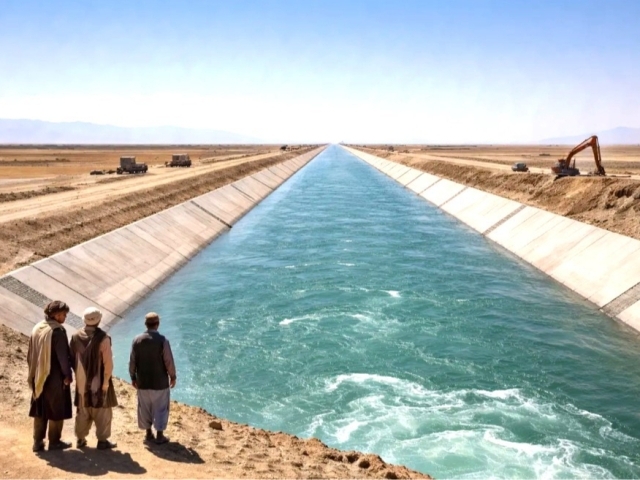

The Qosh Tepa Canal in Afghanistan is nearing commissioning, with water from the Amu Darya expected to be released into the waterway in the near future, according to Tolo News.
The project is one of Afghanistan's largest water infrastructure undertakings and is designed to divert water from the Amu Darya to irrigate hundreds of thousands of hectares of agricultural land in the north of the country.
According to Afghanistan's National Development Corporation (NDC), excavation work on the second phase of the Qosh Tepa Canal is 99 percent complete, while construction of 47 bridges and water control infrastructure is currently underway.
NDC spokesperson Nabiullah Arghandiwal stated that construction of the canal has entered its final stage and that the corporation is working toward releasing water from the Amu Darya into the headworks and the main Qosh Tepa Canal in the near future. He added that construction of the canal's main intake structure is ongoing and assured that the corporation is closely monitoring the project's implementation.
According to the outlet, completing the project will help expand cultivated land, boost agricultural output, create new jobs, and reduce Afghanistan's reliance on imports for certain food products.
“The most important aspect is that Afghanistan must introduce necessary improvements to the canal's irrigation system to ensure efficient water use and support growth and development in the agricultural sector,” said economic analyst Mir Shakib Mir.
Preliminary estimates indicate that the Qosh Tepa Canal will have a flow capacity of roughly 650 cubic meters per second and is expected to irrigate between 500,000 and 600,000 hectares of farmland once operational.
Wasim Safi, executive director of the Afghanistan Chamber of Agriculture and Livestock, noted that the Qosh Tepa Canal is one of Afghanistan's largest agricultural irrigation projects and will provide major momentum to the sector.
“Once this canal is completed, lands that have been deprived of irrigation due to drought and water shortages will once again receive life-giving water and restore their fertility,” he said.
Notably, at a press conference on November 19 of this year, Uzbekistan’s Minister of Water Resources Shavkat Khamrayev stated that Afghanistan will not begin full-scale water withdrawal from the Amu Darya via the Qosh Tepa Canal before 2030.
The minister said Uzbekistan maintains ongoing dialogue with the Afghan side regarding transboundary water resources, including hosting a delegation led by Afghanistan's deputy minister of agriculture in Tashkent in November. Khamrayev also acknowledged Afghanistan's right to use water from the Amu Darya and noted that both sides agreed to sign water-sharing agreements once construction of the canal is completed.
“They will start drawing water after construction is finished. They might even start in 2050. But, certainly, they will not draw water before 2030,” he said.
Earlier, it was reported that the Qosh Tepa water infrastructure project in Afghanistan had received covert financial assistance from the U.S. Agency for International Development (USAID), and that the aid continued even under the Taliban.
Environmental consequences of the Qosh Tepa construction
The Amu Darya is one of Central Asia’s major rivers, supplying water to Uzbekistan, Turkmenistan, Tajikistan, and Afghanistan. However, its water levels have dropped sharply over recent decades; whereas the river flowed into the Aral Sea in the 20th century, virtually not a single drop reaches it today.
The Qosh Tepa Canal project has already sparked international debate over water withdrawals from the Amu Darya, which is vital for Central Asia. Downstream countries Turkmenistan and Uzbekistan are already experiencing acute water resource challenges, and the canal could divert up to 10 cubic kilometers of water annually from neighboring states. In low-water years, when total river flow drops to 40 cubic kilometers, the canal could siphon off a quarter of the river's volume—worsening ecological conditions, drying out reservoirs, and intensifying drought.
The construction of Qosh Tepa threatens to disrupt the regional water distribution balance. According to the Interstate Commission for Water Coordination of Central Asia (ICWC), lakes in the lower reaches of the Amu Darya could receive just 30 percent of their required water inflow due to the new canal, accelerating desertification and worsening drought.
Furthermore, the likelihood of technical problems remains high. Satellite imagery suggests construction is being carried out hastily and without proper oversight. The canal has been excavated using rudimentary methods without reinforcing its embankments, increasing the risk of severe water seepage into sandy soils, which could disrupt irrigation systems and cause further environmental damage.
“The quality of construction is naturally questionable, as it was excavated largely using last century's methods due to the Afghan government's lack of modern technology and substantial capital. There have also been water leaks—something similar has been recorded in satellite imagery,” said Nikita Mendkovich, political scientist and head of the Eurasian Analytical Club.
According to Mendkovich, this will reduce the flow of the transboundary river and negatively affect downstream water supplies in Uzbekistan and Turkmenistan.

Live
All