Uzbekistan plans to boost meat production by 400,000 tonnes
−
4362 4 minutes
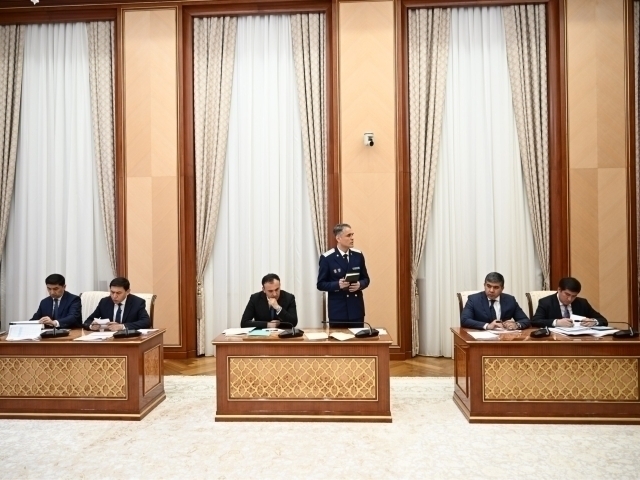
Uzbekistan plans to increase the live slaughter weight of cattle from 250–350 kilograms to 450–550 kilograms and create the capacity to produce an additional 400,000 tons of meat. These goals were outlined during a presentation reviewed by President Shavkat Mirziyoyev yesterday, November 25, on comprehensive measures to develop the livestock feed base.
Currently, feed expenses account for 30 percent of the production cost of meat. Nationwide, 12.5 million head of cattle, 23 million sheep and goats, and 125 million poultry are raised, while annual feed production stands at 48 million tons—falling short of actual demand. Specifically, whereas one head of cattle requires 6.5 tons of feed per year, actual supply does not exceed 4 tons.
Furthermore, at least 20 percent of the nearly 480,000 hectares of land allocated for livestock farming is being used inefficiently. Forage crop yields, the system for supplying quality feed to rural households, and selective breeding practices also fall short of modern standards.
In response, the presentation proposed comprehensive measures to raise annual feed production to 64.5 million tons by 2027 and 90 million tons by 2030.
First, regional feed balances will be compiled, and the accounting of forage crop areas and varieties will be fully digitalized. Targeted use of land allocated for livestock farming will be monitored via satellite imagery.
By utilizing existing farmland more efficiently, expanding second-crop planting, and introducing high-yielding varieties alongside modern agricultural technologies, authorities plan to boost forage crop yields from 350 to 500 centners per hectare.
Plans also include bringing 200,000 hectares of land back into agricultural circulation for forage crops by 2030, including 50,000 hectares next year.
Special attention was paid to improving pasture productivity. Drawing on foreign expertise, the cultivation of drought- and salinity-tolerant forage crops will be launched across eight districts of the Kashkadarya region, while drone seeding is scheduled to be carried out across 1 million hectares of pastureland nationwide by 2030.
Officials also proposed creating an integrated value chain covering feed cultivation, processing, storage, stockpiling, and delivery to consumers.
To achieve this, more than 100 feed centers and distribution points will be established across the regions to purchase feed in bulk, process it, maintain sufficient reserves, and ensure uninterrupted market supply. This system will play a particularly vital role in supplying affordable, high-quality feed to private households, which raise 87 percent of the country's cattle.
The presentation also reviewed new financial support mechanisms for livestock entrepreneurs:
- For entrepreneurs who reclaim over 500 hectares of land for forage crops and install modern irrigation systems, reservoirs with a capacity of up to 100,000 cubic meters will be built using local budget funds.
- Subsidies for introducing center-pivot irrigation technology will be raised from 2.5 million to 4 million soums per hectare, while up to 50 percent of equipment purchase costs will be reimbursed for farms using renewable energy sources to irrigate at least 10 hectares.
- Entrepreneurs reclaiming pastures in the Republic of Karakalpakstan and the Navoi, Bukhara, Kashkadarya, and Khorezm regions will be granted the right to build livestock complexes on a portion of those lands.
- Concessional loans will be allocated for setting up feed centers and growing forage crops, alongside additional incentives for purchasing modern agricultural machinery and partial reimbursement for hiring foreign specialists and training local staff.
Starting in 2027, a pilot program is proposed for the Kashkadarya region to subsidize 10 percent of feed purchase costs for livestock raised in private households.
Efforts to apply scientific advancements and develop seed production were also highlighted, given that 95 percent of Uzbekistan's forage seed demand is currently met through imports. Plans were presented to establish research and seed-breeding centers in Kashkadarya in collaboration with Egyptian scientists to develop high-yielding, drought- and salt-resistant varieties suited to local climatic conditions and gradually reduce seed imports.
Additional opportunities to expand meat and dairy output through genetic improvement were also outlined, including the widespread adoption of artificial insemination and high-genetic-value embryo transfer technologies, expansion of regional breeding services, and cooperation between large farms and household producers.
Collectively, these measures are projected to significantly raise livestock productivity, increase cattle live slaughter weight from 250–350 kg to 450–550 kg, and create capacity for an additional 400,000 tons of meat.
President Mirziyoyev emphasized that ensuring sustainable growth in the livestock sector requires building a solid feed base, using land and water resources rationally, and raising production efficiency through science and modern technology. Officials were instructed to refine the proposals, establish clear financing mechanisms, formulate targeted regional projects, and ensure price stability for meat and dairy products on the domestic market.

Live
All