Political unrest, the “butchers” who killed Uzbeks, and a ministry that finally spoke — Weekly analysis
Review
−
14 February 13554 15 minutes
“Ronaldo” allegedly attempted murder. A Kyrgyz MP demanded payment from Uzbekistan for water. In Turkey, not one but two women were brutally murdered and their bodies were dumped in trash containers. Girls not even 20 years old were detained with narcotics hidden inside various items. Political turbulence is unfolding in Kyrgyzstan. Could history repeat itself? Full details of these and other events are covered in the weekly analysis from the Qalampir.uz studio.
A Kyrgyz MP demanded payment from Uzbekistan for water
Much has been said about the situation in Kyrgyzstan. This can also be seen in the comments section, where Uzbek readers wrote: “Why are you discussing others’ affairs so much?”, “Are you Kyrgyz media?”, and “Why does this concern you?” We will give a general response. First, journalism recognizes neither borders nor time limits. Broader coverage is only an advantage.
Second, and most importantly, the situation in Kyrgyzstan directly affects you and us in terms of security, the economy, border stability, water, and other resources. A simple example: amid internal divisions and the formation of competing groups around two major figures, dismissals and removals from office have been taking place, and during this period a Kyrgyz MP demanded payment from Uzbekistan for water.
Notably, the person who voiced this criticism during a Jogorku Kenesh session — Umbetali Kydyraliyev — is considered close to Tashiyev, who was reportedly dismissed after being seen as a potential presidential contender. You can see the connection.
Indeed, Tashiyev stands out for his resolute character even more than Japarov. He prefers direct pressure over diplomatic language. His political image is built around the idea of a “strong hand” restoring order. His speeches often prioritize Kyrgyz national interests and display national pride in a somewhat aggressive manner.
For this reason, his statements provoke two very different reactions. Among the public, his firmness boosts his popularity. On the international stage, his emotional rhetoric and nationalist tone are perceived in diplomatic circles as a source of dangerous tension.
An interview in a documentary prepared to mark the fifth anniversary of Japarov’s presidency also supports this point. He said that after negotiations with Uzbekistan regarding the construction of the Kampirobod reservoir, work stalled for a time.
At this point, it is worth briefly examining how justified the demand for payment for water is. International law is based on the principle that water is not a commodity. According to the 1997 UN Convention on transboundary watercourses, water itself cannot be treated as a tradable good.
An upstream country such as Kyrgyzstan has no right to block or sell water to downstream states like Uzbekistan and Kazakhstan. There is also an obligation not to harm the vital interests of neighboring states when using water resources. Although international law prohibits selling water, it supports the joint funding of maintenance costs for water infrastructure by interested states. The Kyrgyz MP may have misinterpreted this provision or used the word “sell” to gain political points and portray himself as defending the public’s interests.
The United States and Germany, cited by Kydyraliyev, pay not for water itself but for the maintenance of reservoirs and similar services under mutual agreements. The Kyrgyz MP’s renewed sharp rhetoric toward neighbors with whom relations have only recently improved, and his support for Tashiyev, have raised further questions.
What is happening in Kyrgyzstan?
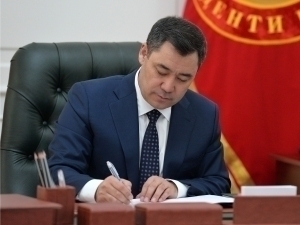
This brings us to the question: what is happening in Kyrgyzstan? Recently, questions emerged about the presidential term. Japarov was elected president in January 2021 under the old constitution for a six-year term.
However, the new constitution adopted at the end of 2021 reduced the presidential term to five years. Lawyers say early presidential elections should therefore be held in January 2026. Most notably, 75 people sent an official letter on this matter to the president and the parliamentary speaker.
Given that the group includes academics, former MPs, and officials, it appears the signatories acted with confidence in their appeal. Some claim Tashiyev may be behind this initiative. Japarov and his circle may have seen him as a political risk amid the new legal uncertainty.
Moreover, only a few leaders in Kyrgyzstan’s history have come to power through genuinely democratic elections and peacefully stepped down at the end of their terms. QALAMPIR.UZ prepared a detailed analysis on this topic titled “Is Kyrgyzstan stable? Will history repeat itself?”
The Japarov–Tashiyev tandem came to power after protests erupted on October 5, 2020, following dissatisfaction with the parliamentary election results. Tashiyev was among the first to take to the streets, secured Japarov’s release from prison, and declared him prime minister at Ala-Too Square in Bishkek.
On October 13, then-President Sooronbay Jeenbekov rejected Japarov’s appointment as prime minister, citing irregularities in voting through proxies and the lack of fairness in the election. He asked parliament to reconvene and vote again.
This was done the next day, and Japarov once again won parliamentary nomination. Under pressure from the public and the forces backing Japarov, Jeenbekov resigned on October 15. Japarov declared himself acting president. Although the constitution states that the parliamentary speaker should assume the presidency, Kanatbek Isayev refused the role. As a result, Japarov became acting president and was formally confirmed by parliament on October 16, 2020.
Recent turmoil, including the dismissal of Tashiyev — widely considered the country’s “second most powerful figure” — and the public reaction that followed, has raised concerns that the tradition of political upheaval may be returning. On February 10, Kamchybek Tashiyev was dismissed as head of the State Committee for National Security.
The presidential press service said the decision was made to prevent divisions within the state and strengthen unity. Tashiyev, who was receiving treatment in Germany at the time, said the decision was unexpected and that he was upset he was not given the opportunity to say farewell. Some viewed the move as disrespect or betrayal. However, Japarov said he had called Tashiyev before making the decision.
“Before making the decision, I called my friend, explained the situation, and informed him of his dismissal. I believe this swift decision actually protected him. People around him were leading him astray,” the president said. He added that individuals had begun using Tashiyev’s name to pressure MPs, civil servants, and public figures to “join the General’s side.”
As a result, further dismissals followed. Tashiyev’s first deputy, Qurbonbek Avazov, Cybersecurity Center Director Daniyel Risaliyev, and Anti-Terror Center Director Elizar Smanov were removed from their posts. Abdukarim Alimboyev was reassigned from first deputy head of the State Committee for National Security to chairman of the State Border Service, and Rustam Mamasadiqov took his place.
On February 12, Kyrgyz parliamentary speaker Nurlanbek Turgunbek uulu resigned but remained a member of parliament. He had held the post since 2022. Marlen Mamataliyev was elected speaker with the support of 77 MPs and was the only candidate.
In short, restructuring and the placement of new loyal officials continue. Regardless, the years 2020–2026 will likely be remembered in Kyrgyz history as the “Japarov–Tashiyev era.” They brought the country back from the brink of collapse and established vertical governance, but politics built on loyalty ultimately gave way to the logic of consolidated power.
While “branches are being trimmed” in Kyrgyzstan, the fall of long-time political “giants” has begun in Azerbaijan. We now turn to details of a high-profile criminal case revealed by Azerbaijan’s State Security Service.
The fall of the “grey cardinal” in Azerbaijan
The accusations against Ramiz Mehdiyev, one of the most influential and secretive figures in Azerbaijani politics who led the Presidential Administration for nearly 30 years, have shaken the country. The 87-year-old official had long been considered the most trusted figure of the Aliyev dynasty.
According to official information, Mehdiyev and his associates, including former Deputy Prime Minister Abbas Abbasov, are accused of attempting to seize state power by force and committing treason in cooperation with foreign intelligence services. Notably, far-right opposition leader Ali Karimli is also said to be linked to the alleged plot. This is being interpreted as a covert alliance between the “old guard” within the authorities and external opposition against President Ilham Aliyev.
In addition, members of the Azerbaijan Popular Front Party — Fuad Gahramanli, Ganimat Zahidov and others — are accused of conspiring to violently change the constitutional order.
It is reported that after forming the “National Council of Democratic Forces” during the 2013 presidential elections and nominating foreign citizen Rustam Ibragimbekov, the group allegedly organized mass unrest with financial and organizational support from foreign intelligence services. Authorities claim that $549.31 million, including funds from Mehdiyev and Abbasov, were used for these purposes.
Technical evidence reportedly shows that members of the “Union of Billionaires” were instructed during the 2013 elections to bring Azerbaijani citizens living abroad back to the country, involve their relatives and use them in protests and unrest. The National Council also allegedly sent a confidential letter to foreign leadership in 2013 requesting support and proposing pressure on Azerbaijan.
According to the accusations, from early 2013 Ganimat Zahidov held secret talks with foreign intelligence representatives on behalf of Ali Karimli, seeking organizational support to bring him to power and promising to secure the foreign state’s strategic interests in return. Karimli is also said to have instructed supporters to organize unrest and seize parliament and television buildings during a march in Baku in July 2020.
Authorities say that in August–September 2025 Mehdiyev prepared a document titled “Proposals for the Reconstruction of the State Governance System” and passed it to Russian intelligence representatives. These actions were classified as treason and an attempt to violently change the constitutional order. He is also accused of laundering more than 17 million manats obtained through criminal means by October 13, 2025.
Several individuals have been charged under relevant articles of Azerbaijan’s Criminal Code. Some suspects who are outside the country have been placed on the wanted list and courts have ordered their arrest in absentia. The investigation is ongoing.
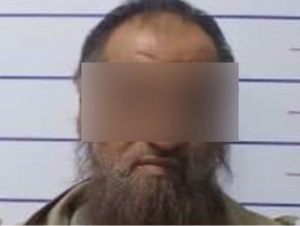
Several criminal cases were uncovered across Uzbekistan this week. In one case, a criminal group led by a man nicknamed “Ronaldo” allegedly hired a hitman to kill an entrepreneur. On February 4, an individual entrepreneur in Andijan region reported a planned assassination attempt to local police.
The group — which included the head of a medical institution and a 23-year-old student — was detained while handing over an advance payment of 300,000 soums from the agreed $1,500 fee to the hired killer.
In Fergana, a 34-member criminal group was exposed for embezzling 1.537 billion soums. The group was led by a 40-year-old man who rented buildings in Fergana and Tashkent and operated under the guise of a call center.
Using information technologies, the group obtained data on more than 70,000 customers of organizations in Russia engaged in selling medicines and dietary supplements.
Fake call-center operators then called mostly elderly people, posing as law-enforcement or bank employees and falsely claiming that the company had sold low-quality medicines and supplements. They promised compensation ranging from 500,000 to 580,000 rubles, approximately 80–92 million soums.
To receive the compensation, victims were told to pay “taxes” of 5,000 to 20,000 rubles, or 800,000 to 3.2 million soums. As a result, victims transferred 9,599,561 rubles, equivalent to 1.537 billion soums, to bank cards provided by the criminals.
This shows the consequences of personal data falling into the wrong hands. The Ministry of Digital Technologies has finally commented on the alleged hacking attack affecting more than 15 million citizens. We will return to this shortly and continue with crime details.
In Tashkent’s Mirzo Ulugbek district, an 18-year-old woman and a 22-year-old man turned a rented apartment into a drug laboratory. The pair, born in 2007 and 2003, had been producing synthetic drugs since September 2025 under instructions from Telegram curators.
During a raid, authorities seized one kilogram of mephedrone and laboratory equipment. Nine individuals distributing drugs through geolocation “dead drops” were also detained.
Three of them were students of prestigious universities. Investigations into all of the above cases are ongoing.
Responding to concerns about rising drug crimes, Interior Ministry adviser Zokirjon Almatov said detection had improved rather than crime increasing during a press tour at the Tashkent City Department of Internal Affairs’ canine center.
“The rise in drug-related crimes does not mean crime has increased. It reflects improved detection and exposure of such offences. Drug trafficking is a form of corruption and organized crime. Organized groups are behind the import, concealment and distribution of narcotics from neighboring countries. Each exposed case is a blow against the roots of crime,” he said.
Crime is an uncomfortable topic to discuss, as any information can have unintended consequences or influence those who are vulnerable. Over the years, particularly among young people, a dangerous admiration for criminal “street culture” has developed.
Individuals who preferred living by their own “rules” rather than the rule of law were once praised and imitated. In the recent past, “playing Po‘lat-Po‘lat” even became a trend. However, many realized too late that behind this false heroism were broken lives, prison bars and lasting wounds.
Today, even those who once lived within that system admit how destructive and dangerous that path truly is.
A second brutality uncovered following one murder
Without moving away from the topic, we will briefly comment on new details of the brutality in Turkey that were revealed this week. It was established that Durdona Hakimova, whose head was severed and whose body parts were cut and thrown into trash containers, was actually the second victim. Earlier, her friend and roommate, 32-year-old Sayyora Ergashaliyeva, had also been brutally murdered, dismembered, and her remains placed in garbage bags and scattered in different locations.
According to available information, the two suspects — 31-year-old Dilshod Turdimurodov and 29-year-old Gofurjon Kamolkhujayev — had lived in the same house as the victims for about a month. On January 22, the victims and suspects had lunch together at a restaurant in Istanbul’s Fatih district. During the meeting, a conflict reportedly arose between Sayyora and Gofur, who were in a relationship. The dispute is believed to have started because the woman wanted to return to Uzbekistan.
One day after the argument, on January 23, the two men allegedly conspired and killed Sayyora Ergashaliyeva. The next day, they sent an SMS from the victim’s phone to Durdona Hakimova, lured her to the location, and stabbed her to death as well. They then dismembered both bodies, placed the remains in plastic bags, and disposed of them in various locations as if they were ordinary trash.
A separate, more detailed analysis on this topic is available on the QALAMPIR.UZ YouTube channel under the title “The Butchers’ Next Victim.”
We now turn to reports that the personal data of 15 million Uzbek citizens had been leaked and posted on the Dark Web, as well as the official response.
On February 12, Digital Technologies Minister Sherzod Shermatov said at a press conference that the reports were not accurate. According to him, preliminary findings show that not 15 million but about 60,000 citizens’ data had been exposed.
“First of all, the claim that the data of 15 million citizens has been leaked and is being sold online is not true. If it were, go ahead and buy it and show us. Secondly, there was indeed a cyberattack. It was carried out by a skilled hacker who managed to access certain systems. In a way, this helps us review other systems and strengthen vigilance. Some data from certain systems was indeed leaked,” Shermatov said.
Attention has been drawn to the minister’s remark, “Buy the data and show us,” especially since it was previously reported that the hacker demanded €200,000 in exchange for returning and deleting the data. The question remains who would be willing to pay such an amount.
There was also positive news this week. With Ramadan approaching, some products — such as dates — traditionally experience sharp price increases. To prevent this, discounted food fairs will be held at farmers’ markets and major shopping complexes across Uzbekistan. The directive was personally issued by President Shavkat Mirziyoyev on February 13.
At a government meeting chaired by President Mirziyoyev on ensuring high economic growth across sectors and regions, he also instructed officials to reduce auto loan interest rates and increase lending volumes to stimulate demand for locally produced cars.
The meeting also reviewed last year’s results. Uzbekistan’s GDP grew by 7.7 percent, exceeding 147 billion US dollars. More than half of this growth came from the services sector. Average income per hectare in agriculture rose from $4,500 to $5,000, and labor productivity increased by 4.7 percent.

Live
AllIsroil Bayrutga zarba bermoqda
05 April