“There is no cheese on the table”: Presidential council criticises food prices
−
7466 6 minutes
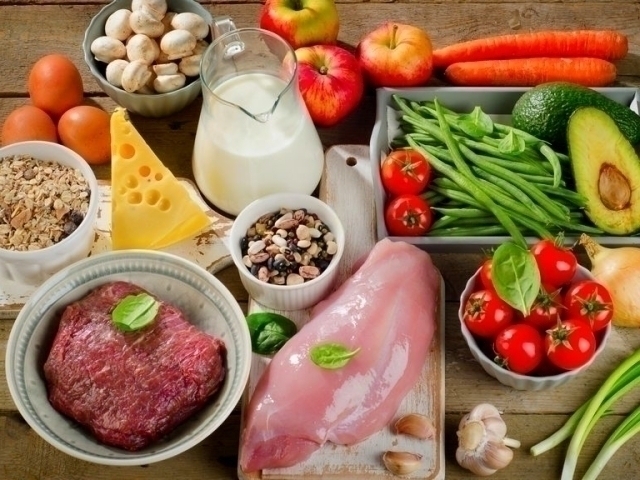
Uzbekistan is considering not extending zero-rate customs duties on imports of certain food products, including condensed milk and cream, yoghurt, cheese, apples, pears, chocolate, pasta, and other goods. The issue was discussed at a meeting of the Public Council for Supporting Entrepreneurship under the President on 27 October.
Currently, zero-rate customs duties apply to imports of 56 categories of food and consumer goods in Uzbekistan. These exemptions remain in force until 1 January 2027.
The ministry has proposed fully extending the exemptions for 45 categories and partially extending them for another two product categories until 2028. However, it plans not to extend the exemptions for the remaining nine product groups.
These include condensed milk and cream, yoghurt, cheese and suzma (a type of strained yoghurt), apples, pears and quinces, chocolate, pasta, mineral and carbonated water, and soft drinks.
Sarvarxo‘ja Xonxo‘jayev, Head of the Ministry’s Tariff and Non-Tariff Regulation Department, stressed that the proposal did not mean the existing exemptions would be cancelled ahead of schedule.
“We are not removing any product category from the existing list of exemptions or cancelling them prematurely. As the exemptions are approaching their expiry date, we are considering which products could qualify for an extension,” he said.
In justifying its proposal, the ministry took into account the production capacities of local enterprises and their ability to supply the domestic market.
For example, between January and August 2026, 84 enterprises produced 84,000 tonnes of condensed milk and cream, while imports amounted to 15,000 tonnes. Yoghurt production involved 77 enterprises, which produced 50,200 tonnes over the same eight-month period.
However, council members said that production and import volumes alone were insufficient to assess market needs. They stressed that consumers’ purchasing power, product prices and growth in consumption should also be taken into account.
‘Cheese is still not on every Uzbek family’s table’
Economist Otabek Bakirov opposed the proposal to discontinue the exemptions. According to him, prices for certain products have risen faster than overall inflation over the past nine months.
“Removing a product from the list of exemptions must be justified economically and financially. However, I have not seen such justification,” Bakirov said.
He noted that once the exemptions expire, import duties of 15 per cent could be imposed on cheese and suzma, while yoghurt, apples and pears could face duties of 20 per cent. This would make these products less affordable for consumers.
“The Uzbek people have only recently reached a point where they no longer have to hide these products from their children or save them exclusively for guests. People are beginning to move beyond simply worrying about putting food on the table and are starting to think about more substantial needs, responsibilities and goals. Cheese is still not found in every Uzbek household,” the economist said.
He also criticised the practice of extending zero-rate duties every year. In his view, uncertainty over the future of the exemptions at the end of each year creates difficulties for importers, producers and consumers. Bakirov proposed retaining zero rates for all the products under consideration and setting them for at least three years.
Higher duties could also push up the prices of locally produced goods
Zafar Hoshimov, Chairman of the Association of Trade and Services, also objected to reducing the exemptions. In his view, the existence of sufficient domestic production capacity does not necessarily mean that the population is fully supplied with products. For example, some of the apple harvest is used to produce juice and other goods, while another portion is lost during storage and transportation.
Hoshimov stressed that higher import duties could affect the prices of both imported and locally produced goods.
“When duties are introduced, it is not only imported products that become more expensive. Prices on the domestic market also rise. If imported apples become 20 per cent more expensive, local producers may raise their prices as well because competition will weaken,” the entrepreneur said.
According to his estimates, a 20 per cent duty could, in some cases, increase a product’s final price by 25–26 per cent. He also noted that ordinary households spend nearly 40 per cent of their income on food.
“Businesses should adapt to consumers, not the other way around. There should be no situation in which businesses are protected at the expense of consumers,” Hoshimov said.
The entrepreneur also warned that higher duties could encourage an increase in the unofficial import of goods from neighbouring countries. He proposed changing customs rates according to a predictable and transparent procedure, for example, reviewing them once every three years and notifying market participants six months in advance.
Hoshimov stressed that assessments of the domestic market’s supply capacity should take into account not only production and import volumes but also growth in consumption. In his view, current production levels may be sufficient, but rising demand next year could lead to shortages and price increases.
Draft resolution to be returned for revision
Other participants at the meeting also said the proposal required further economic analysis. Discussions covered challenges in the dairy sector, rising production costs, business closures, the scale of unofficial trade, and the potential impact of changes to customs duties on employment and tax revenues.
At the end of the meeting, the chair noted that the draft did not contain sufficient analysis and calculations to justify some of the proposals. It was therefore suggested that the document be returned to its developers for revision, with additional calculations to be conducted and the proposals discussed again with entrepreneurs.
Thus, the proposal not to extend customs exemptions for nine product groups remains under consideration. No final decision has yet been made on which products will continue to benefit from zero-rate import duties from 2027.
For reference, zero-rate import duties on certain food and consumer goods were introduced in Uzbekistan in 2022 to curb inflation and stabilise prices on the domestic market. The list of exempt products was subsequently expanded, and the exemptions were extended several times. Most recently, Presidential Decree No. PF-269 dated 30 December 2025 extended them until 1 January 2027.